
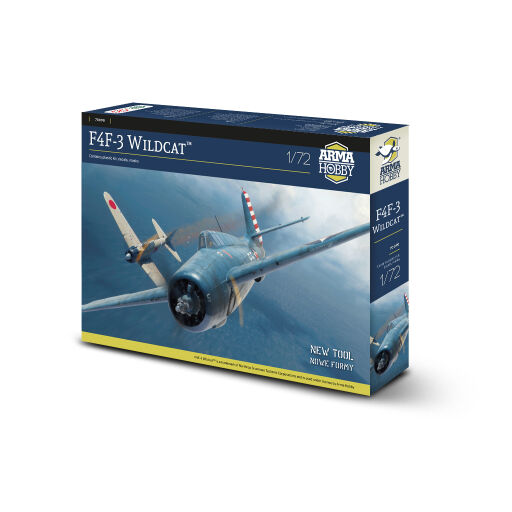


70090 F4F-3 Wildcat™.
- Add feedback: (See the reviews)
- 70090
- Manufacturer: Arma Hobby
-
Availability:
In Stock
Delivery time: 1-3 days
- Type: Aeroplane Kit
- Medium: plastic
- Scale: 1/72

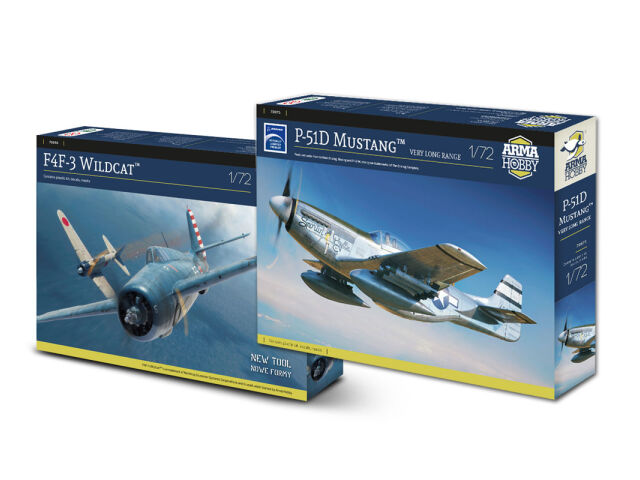
F4F-3 Wildcat Early Pacific War 1/72 is a brand-new Arma Hobby kit made from completely new molds created specifically for this version. It represents the early Wildcat from the opening months of the Pacific War.
Inside the box you will find three historical marking options, canopy and wheel masks, decals, and new clear parts with the Arma JIG system. The kit also includes a code for a free 3D printable accessories file.
F4F-3 Wildcat™ Plastic Model Kit
Plastic model kit for assembly.
Completely new molds for all parts – an all-new tooling created specifically for the F4F-3 version. This is a separate kit, different from the earlier Arma Hobby F4F-4 Wildcat and FM-2 Wildcat releases.
New clear parts with Arma JIG system – designed for easier and more precise canopy assembly. These parts are also compatible with previous Arma Hobby Wildcat kits.
- plastic parts
- canopy and wheel masks
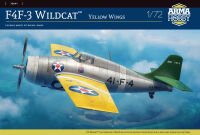
- decal sheet with three marking options
- free digital file – download code included
The kit includes three historical marking options:
- F4F-3 Wildcat “F-5”, VF-2, USS Lexington, flown by Lt. Albert O. Vorse Jr., Battle of the Coral Sea, May 1942
- F4F-3 Wildcat BuNo 4019 “211-F-11”, VMF-211, Wake Island, December 1941
- F4F-3 Wildcat “F-13”, VF-3, USS Lexington, early 1942
Free 3D File for Printing F4F-3 Accessories (Download Code Included in the Instructions)
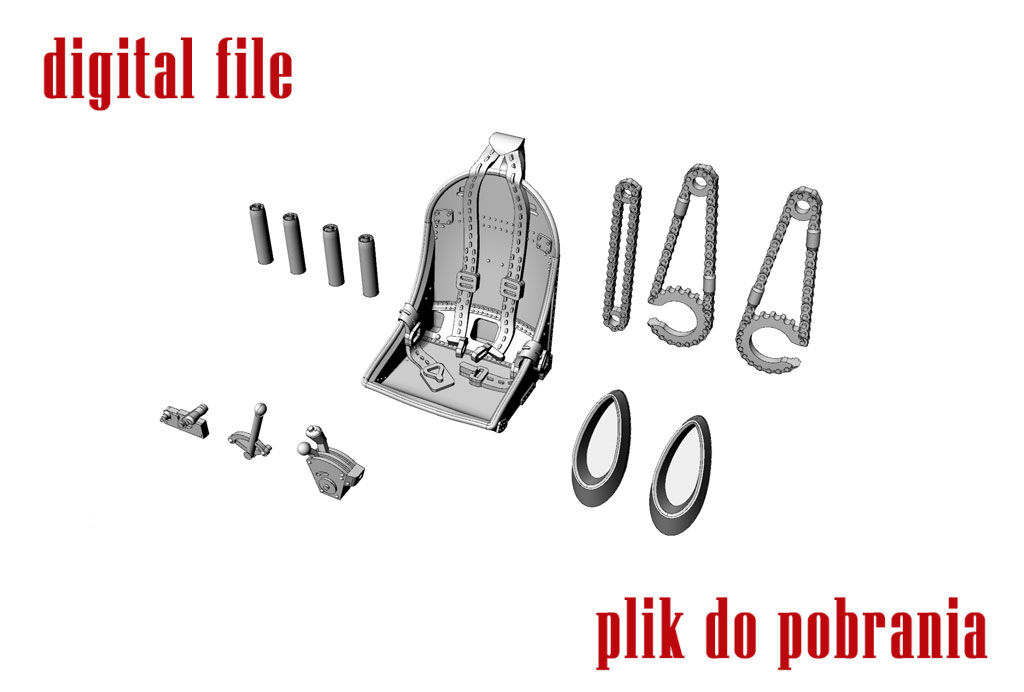
- Includes: seat with harness, exhaust pipes, landing gear opening mechanism chains, cockpit control lever set, and gun barrels.
- File for self-printing on a 3D resin printer. Consumer license for non-commercial use only.
- See Terms of Use for 3D Files §4a link.
Wildcat Fighters – The First Months of the Pacific War
Grumman F4F-3 Wildcat was the U.S. Navy’s main carrier fighter during the opening phase of the Pacific War. It was this version that entered combat after the attack on Pearl Harbor, when the American fleet had to halt Japan’s offensive advance. Although less manoeuvrable than the Japanese Mitsubishi A6M Zero, the Wildcat was tough, well protected compared with enemy aircraft, and capable of returning even after severe damage.
The F4F-3 had fixed, non-folding wings and was armed with four .50 calibre machine guns. It was valued for its rugged construction, stability as a gun platform, and reliability during operations over the open ocean.
In the first months of the war, Wildcats took part in a series of American carrier raids against advanced Japanese bases across the Pacific. Their main role was escorting carrier bombers and defending the task force against enemy attacks. Even then, several pilots scored their first victories in the F4F-3, beginning the path to fighter ace status.
The F4F-3 played an important role in the Battle of the Coral Sea in May 1942 – the first naval battle in history fought entirely by aircraft operating from carriers. Wildcats protected their own ships and strike aircraft.
A weakness of the F4F-3 was the lack of folding wings, which limited the number of aircraft that could be carried aboard carriers. For that reason, after the Battle of the Coral Sea, units were rapidly re-equipped with the newer Grumman F4F-4 Wildcat, while older F4F-3s were gradually moved to secondary duties.
Although the F4F-3’s frontline carrier service was brief, it was this variant that carried the burden of fighter combat in the hardest period of the war, when the outcome of the Pacific struggle was still uncertain.
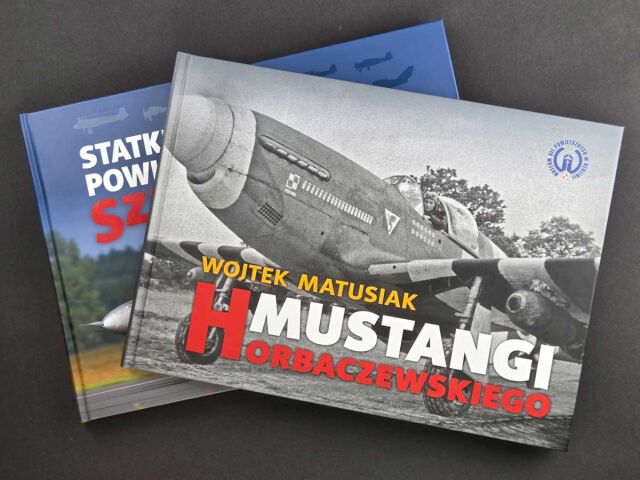
New Aviation Books at Arma Hobby Shop
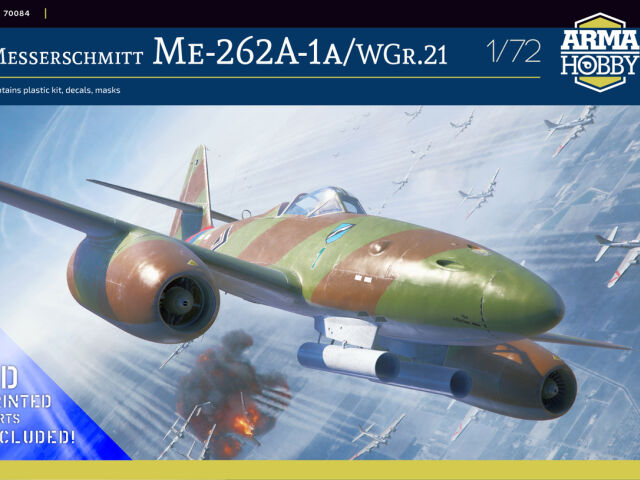
Arma Hobby June '26 Releases





 Message us on WhatsApp


 Polish